National Bible Week

November 23, 2008 by Lillie 

Mann House 2008


Today is Bible Sunday, the first day of National Bible Week, November 23-30. The goal of National Bible Week is to encourage people to read and study the Bible, God’s Word.

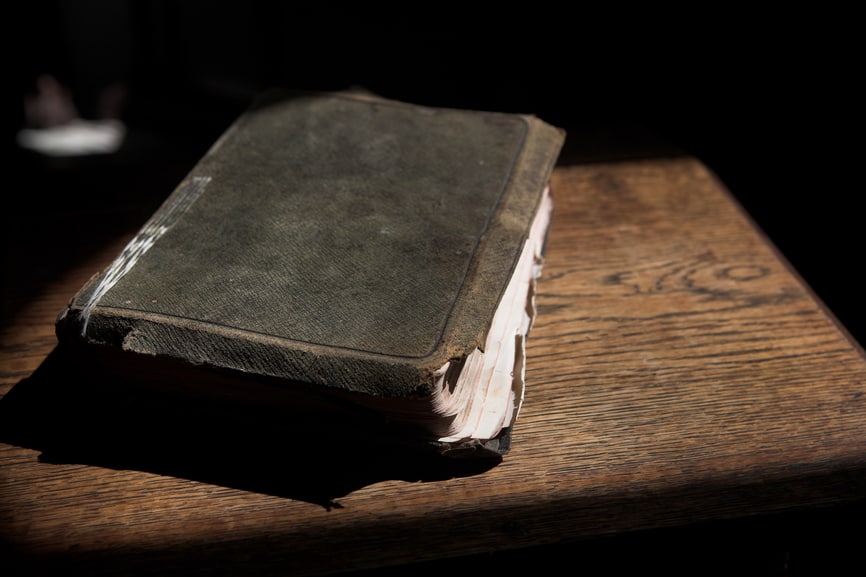
A well-worn Bible like the one in the photo indicates a well-versed Christian.

If you would like to start studying the Bible but aren’t sure how to go about it, read my two part-series Reading the Bible.

Creative Commons License photo credit: CedarBendDrive

 All Scripture is God-breathed and is useful for teaching, rebuking, correcting and training in righteousness, so that the man of God may be thoroughly equipped for every good work.
~ 2 Timothy 3:16-17 (NIV)

BLESSED Lord, who hast caused all holy Scriptures to be written for our learning; Grant that we may in such wise hear them, read, mark, learn, and inwardly digest them, that by patience and comfort of thy holy Word, we may embrace, and ever hold fast, the blessed hope of everlasting life, which thou hast given us in our Saviour Jesus Christ. Amen.

Don’t neglect your Bible like the Bible in this video is neglected.

Reading the Bible: Part 2 – Reading to Learn and Understand

December 5, 2007 by Lillie 

Table of contents for Reading the Bible

  1. Reading the Bible: Part 1 – Bible Reading Plans
  2. Reading the Bible: Part 2 – Reading to Learn and Understand

Although I hadn’t planned the last post on Bible reading plans to be part of a series, I woke up with an idea for a follow-on post. I believe those ideas that come during sleep are from the Holy Spirit so here’s the post.

The collect (collective prayer) for the Second Sunday in Advent (which is this coming Sunday) from the 1928 Book of Common Prayer is one of my favorites:

BLESSED Lord, who hast caused all holy Scriptures to be written for our learning; Grant that we may in such wise hear them, read, mark, learn, and inwardly digest them, that by patience and comfort of thy holy Word, we may embrace, and ever hold fast, the blessed hope of everlasting life, which thou hast given us in our Saviour Jesus Christ. Amen.

The first step in developing a regular habit of Bible reading is to choose a plan. I pointed out a number of different plans in the previous post. If you’re new to Bible reading, you may want to start with a plan to read a verse or a short passage each day or to follow a reading plan for a short period of time. You can grow into longer readings or a more ambitious plan. In addition to the plans mentioned in the last post, you can find a Bible reading plan and extensive free Bible study resources at Christianity.com, which I learned about through a comment on the last post. YouVersion, a fairly new site that I also learned about through a comment, offers community and collaboration features for Bible study.

The second step is to “hear …, read, mark, learn, and inwardly digest them.” Just going through the motions of reading the words isn’t enough. The prayer above describes what we need to do:

  1. Hear: Sometimes we absorb the words better if we hear them audibly than if we just read them in print. You can hear the Word read in audio Bibles online.
  2. Read: As helpful as it can be to hear the Word, you have to make the effort to read for yourself as well. Early Christians didn’t have Bibles to read, and even today Christians in many parts of the world don’t own Bibles. We often take the Bible for granted and don’t realize what a blessing it is to be able to own the Bible and to read it ourselves rather than depending on someone else to tell us what it says.
  3. Mark: When we’re trying to understand and learn anything, highlighting text and making notes helps us to understand what we’re reading and to remember important points. You can make notes and highlights if you register as a user at Christianity.com as well as in your print Bible.
  4. Learn: Use the Bible study tools I’ve listed to gain insights, learn, and understand. The JesusWalk Bible Study Series includes several questions in each lesson to lead students to a deeper understanding of the Scripture. I find it helpful to write the questions and answers in a journal. Even if you’re reading on your own, you can keep a journal to write how the passage affected you and what it means to you. Memorizing verses is also a good way to learn.
  5. Inwardly digest: I love this phrase. When we digest our food, it nourishes our body to keep us physically healthy. When we digest God’s Word, it nourishes our soul to keep us spiritually healthy. I want God’s Word to be a part of me.

I hope these suggestions inspire you to study the Bible to make God’s Word part of you.

Reading the Bible: Part 1 – Bible Reading Plans

December 4, 2007 by Lillie 

Table of contents for Reading the Bible

  1. Reading the Bible: Part 1 – Bible Reading Plans
  2. Reading the Bible: Part 2 – Reading to Learn and Understand

My post on Advent Bible study generated the following comment:

i sometimes have free time at my work and sometimes i try reading the bible but a lot of it is hard to understand and follow. Maybe i should just skip the old testament… you have any tips for reading the bible effectively?

Although I answered the question in comments, I thought it worthwhile to create a post for others who might have a similar question and who might not read comments.

If you’re just starting to read the Bible regularly, you may want to start with the New Testament. The Old Testament has fascinating stories that help us understand where man came from and incredible prophecies as well as beautiful poetry. However, there are also lots of things that are hard to understand … and some – like So-and-So was the father of Such-and-Such – that can be boring to read.

You may also want to try a Bible reading plan that includes different parts of the Bible on a regular basis rather than reading straight through. I read the Bible readings from the Book of Common Prayer, which includes a Psalm, an Old Testament lesson, and a New Testament lesson for each day. I read the lessons from Morning Prayer one year, then the lessons from Evening Prayer the next year. The lessons can be found at Daily Offices. Click on the link to Ordo Calendar with links to Morning & Evening Propers to go to the current month’s calendar with links to the readings.

I also read one chapter a day in order from the beginning of the Bible. When I finish the Bible this time, I’ll start on a chronological plan to read the Bible in chronological order rather than the order the books were written. I find it fascinating, for example, to read Psalms along with the historical events, especially in King David’s life. You can find a schedule to read the Bible chronologically at ChristianBeliefs.org.

If you would rather read more randomly, you can find a 52-week Bible reading plan at BibleReading.com. The readings are selected for variety from day to day so you read the entire Bible in a year. You can spend more time on each reading if you want to take longer than a year. Meditating and understanding the Word is more important than reading on a specific timetable.

Heartlight offers a variety of Bible reading plans. A plan at Christian Answers breaks down the reading by type of writing. You can choose a 1 year plan or a 3 year. Suggestions for a variety of plans can be found at All About God. Bible Gateway offers several different reading plans. Some are for as short a time period as 61 days, which may be the way to start if trying to read the whole Bible seems overwhelming. About.com Christianity lists links to a variety of reading plans.

Try different versions of the Bible to see which you like best. I love to read the King James Version because it is so beautiful, but I usually read the New International Version because it’s easier to understand. A paraphrase such as The Message can be helpful for understanding, but a paraphrase is just that – different wording on the original text – so I prefer to read translations rather than paraphrases.

You may also find it helpful to read commentaries to help you understand specific passages. At Crosswalk.com, you can “include study tools” when you look up verses and choose among a number of different commentaries and study tools.

Look at these different options and experiment to see what works for you. The main thing is to make a commitment to read something – even if only a few verses – every day. As you grow in your knowledge of the Bible, you will find it easier to read and understand and will want to learn more.

In addition to reading the Bible on your own, I encourage you to participate in group Bible study. Check to see what studies your church offers, sign up for an online course such as those from JesusWalk Bible Study Series … or both!