Guest Post from Randall Davidson: Ten Proofreading Tips You Cannot Afford to Ignore

August 9, 2011 by Lillie 

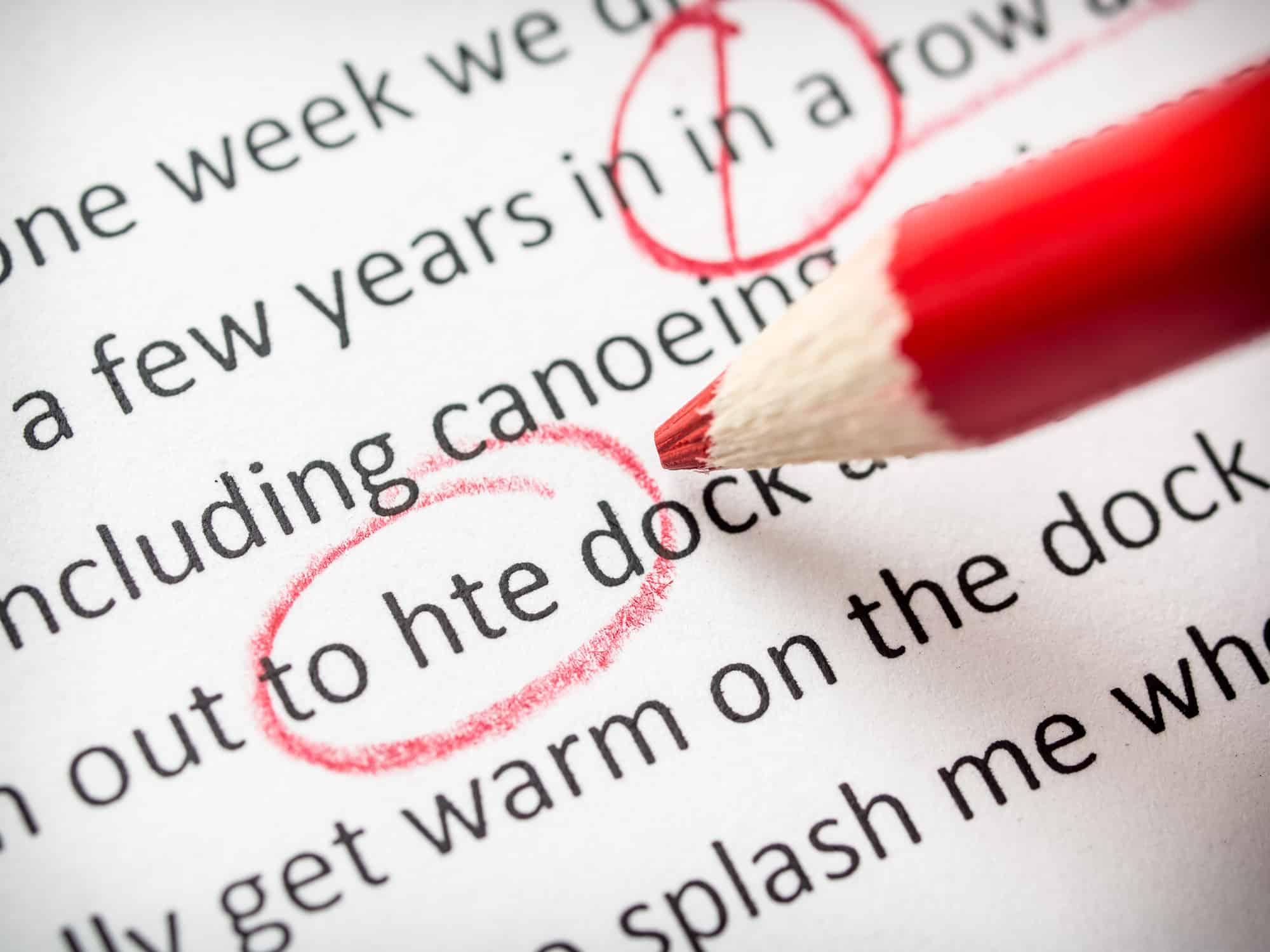
No matter how skilled of a writer you are, it is easy to submit work that is filled with errors. Even the best writers often miss the mark when it comes to proofreading. However, correcting errors in your work can give you the edge over the competition, making the following 10 proofreading tips of the utmost importance:

  1. Use fresh eyes. Proofreading after a break from writing can help you see your work with fresh eyes and catch things that need to be fixed. Try proofreading all the work completed in one day the next morning. If time is of the essence, read something else before returning to your own composition.
  2. Know your weaknesses. Most writers have errors that frequently pop up in their work. Keep a list of the common errors that you are prone to and check specifically for those items when proofreading.
  3. Watch for little things. Small words that are misspelled or misused are commonly missed when proofreading. For example, keep a close eye on words like “it” and “is.”
  4. Know the style. Different publications and editors adhere to different style guides. Decide which style you prefer and adjust your writing to meet those guidelines. AP style, for example, may support different punctuation and grammar preferences than the Chicago Manual of Style.
  5. Vocalize your work. Read your piece out loud to yourself. Hearing your writing vocalized can help you access different areas of your brain than writing and reading, making it easier to pick up on the mistakes.
  6. Find a friend. A fresh set of eyes is often one of the best ways to ensure error-free writing. Have someone read the work and point out the errors that they notice. A new reader may also be able to offer new proofreading tips.
  7. Split the tasks. There are numerous types of errors that can be present in your writing. Focus separately on each type of mistake. Use one read-through to look for spelling issues and a separate proofreading session for things like grammar and style mistakes.
  8. Change it up. Reading the text in a way that is not intended can make errors more obvious. For example, read your work from bottom to top or from right to left. This separates each word from the larger context and makes it easier to spot errors.
  9. Watch the lighting. Subtle nuances can impact your success at finding and correcting errors. For example, fluorescent lights make it harder to see small mistakes in your work. It is better to proofread under natural lighting.
  10. Check the obvious. Don’t assume that you are infallible to mistakes in any particular area. Overconfidence can hurt your finished product. Double-check headings and boilerplate text, and regularly review grammar rules that you are unsure about.

Using these proofreading tips can improve your writing and help you accomplish your goals as an author.

About the author: Randall Davidson is a cofounder of ProofreadingServices.Us, a proofreading service that offers book proofreading. Randall enjoys discussing proofreading and editing tips and best practices with other writers.

Are You an Editing Geek or a Word Nerd?

August 2, 2011 by Lillie 

A while back someone sent me an email suggesting I share a blog post with my readers: Word Nerds Rejoice: Top 25 Blogs For Editing Geeks. I reviewed the list and even subscribed to several of the blogs. Some of the listed blogs deal in editing minutiae, but there are several funny ones as well.

I love words, and I love editing words to make the stories or advice or information a pleasure to read. One editor described me as “the pickiest person I know!” I am a fanatic about misspelled or misused words, awkward and convoluted verbiage, and grammar errors that interfere with readers’ enjoyment or understanding. However, I don’t believe in being a slave to rules. Looking over this list of editing blogs made me think of a post I wrote in November 2006. Since most of you weren’t reading my blog back then (actually, I don’t think anyone was reading my blog then!), I decided to share it again.

Rules or Artistic License?

I’ve been following a discussion on a writers e-mail list. Must writers follow all the rules of grammar, spelling, and punctuation, or do the rules stifle the writer’s creativity?

Some writers consider themselves artists who can’t be restricted by rules, while others consider themselves craftsmen bound by conventions.

I fall in the middle—as noted in a previous post, a publisher has called me ”the pickiest person she knows.” As an editor, I have to know and follow grammar rules or I wouldn’t have any customers. On the other hand, my writing style is informal and simple, and I usually don’t worry about all the rules that may be used in formal writing. For example, I don’t mind ending a sentence with preposition. Often it sounds more natural and understandable to do so.

In my view, there are several critical elements to good writing:

  • The reader must understand it. Using the right word is essential. Using it’s when you mean its or using their or they’re when you mean there can confuse your meaning. Punctuation to show when sentences start and end is critical. Writers must follow some rules to ensure that their readers know what the writer is saying.
  • The writing must be consistent. Some style guides call for serial commas (the comma before “and” in a series of three or more: bell, book, and candle). Other style guides say to leave out the last comma if the meaning is clear (bell, book and candle). If you’re writing an academic paper or a newspaper article, you need to follow the appropriate style guide. But if you’re writing a blog entry or an article for your Web site, you can take your choice of using or not serial commas. But whichever you choose, do it throughout the document. Writing “bell, book, and candle” in the first paragraph and “boys, girls and parents” in the second paragraph won’t work.
  • The style of the writing must be appropriate to the subject and the situation. I’ve been editing an academic paper for a doctoral student—that paper is more formal and uses more “big” words than I use in my blog posts. An academic paper should demonstrate that the student has the vocabulary and the formal writing skill appropriate to the level of education. Depending on the purpose of the blog, posts should generally convey the message in a way that is easy and enjoyable for the reader.
  • Dialogue should reflect the education and personality of the character speaking. An uneducated laborer shouldn’t sound like a college professor. But even if dialogue contains improper grammar, it should be punctuated correctly so it is easy for the reader to understand what is being said. And if a character speaks in a dialect, just enough of the dialectal spelling should be used to convey the impression without making it difficult for the reader to decipher what the character is saying.

Understanding the rules and knowing when you can break them is one of the hallmarks of a good writer.

Of course, since even good writers (and editors) are human, sometimes we all break the rules without intending to. Most editors say we can find everyone’s errors but our own. So if you see me breaking the rules … maybe I did it on purpose, and maybe I just goofed!

Would You Perform Surgery on Yourself?

July 15, 2011 by Lillie 

Agatha Christie Passenger to Frankfurt manuscriptSomeone left a comment on one my posts about freelance editing rates basically saying he didn’t need to know about editing rates because he would never pay anyone for editing—he does his own editing.

Of course, everyone should self-edit his or her own work. I’ve written several articles on self-editing, including Ten Tips for Self-Editing, Editing: Turning Dreck into Prose, and a seven-part series on editing that is focused on editing your own work.

If it’s not critically important that your work reflect a level of excellence, editing yourself is fine. I edit my own casual writing, including blog posts. No one needs to hire an editor to edit an email—unless the email is important to closing a sale or resolving a problem for an angry client or preventing adverse consequences in a critical situation.

Self-editing alone is not enough when it is important that your work be the very best it can be. For books or important articles, I use an outside editor. Even though I am a professional editor myself (and a very good one, if I say so myself!), I don’t catch my own mistakes as effectively as I catch the errors of others.

There are several reasons most of us find it difficult to be the sole editor on our own work:

  • As writers, we know what we meant, and we tend to read what we meant, not what we actually wrote. I’m notorious for leaving out the words “no” and “not,” saying exactly the opposite of what I mean. When I read my own work, though, I tend to read the words that aren’t there—because I know they’re supposed to be there.
  • None of us knows everything, so we will miss errors that we don’t know are errors. Perhaps we have a wrong understanding of what a word means or how it should be used, or maybe we’re confused on when to use an ellipsis and when to use an em dash.
  • We read from the perspective of someone who is an expert in the subject matter, not from the point of view of our target audience, who may not be familiar with jargon we use or who may not understand what we write because they lack background knowledge.
  • The way we express ourselves makes perfect sense to us, but sometimes what we’re saying is not so clear to others. Our sentence structure may be awkward or our word usage confusing to others, but we will never recognize those problems.

A professional editor can give you a different perspective that can make the difference between a mediocre article and a great one. Even asking someone else who isn’t a professional editor to read and give you feedback is better than trusting your own editing.

There’s a saying among editors, “I can catch everyone’s mistakes but my own.” Editing yourself on a major work is like being your own doctor when you need surgery. :-)
Creative Commons License photo credit: Sutherland85.

Why Give a Sample Edit?

February 28, 2011 by Lillie 

In a comment on a post about freelance rates, Chad asked, “Can you recommend an alternative to providing samples to prospective clients? Would a resume be a good substitute?”

In my reply to Chad’s comment, I explained why I think a sample edit is good for both the freelance editor and the potential client for several reasons.

Clarification added 3/1/11: Note that the sentence above says freelance editor. I thought it was obvious that I was talking about a professional editor providing a sample edit of a few pages of the client’s manuscript. Somehow, one commenter thought I was advocating sending the original draft and edits of a writing project to the client. That is not what I wrote, and that it not something I would recommend.

First, it’s how I determine how much to charge. All editing jobs are not created equal. Some writers are much better than others, and some writers require extensive editing. I never charge by the page or the word because the good writer overpays and the bad writer underpays (and I’m the one who doesn’t get the money I should!). I ask the prospective client to send me an excerpt from the manuscript for me to edit. The time I spend on the sample guides me in determining the time I estimate for the entire project. My quote includes the proviso that the price is based on the assumption that the entire manuscript is self-edited to the same degree as the sample. The fee will be adjusted if the excerpt submitted for the sample edit has been polished, but the rest of the manuscript submitted for editing is very rough.

Editing a sample also helps me to feel comfortable that I’m a good fit to the manuscript. I don’t edit erotica or stories with extreme levels of violence, and I simply am not familiar enough with the conventions of some genres to do them justice. I also have to find the story intriguing—it would be an injustice to edit something that I don’t completely believe in. There’s no better way to determine that I will enjoy editing the manuscript than actually doing it.

The sample also gives me an understanding of what the client wants—writers have different expectations. Some just want an editor to tell them their words are golden. It’s much better to spend a few minutes doing a sample and find out they don’t like your work than to take on the job and have an unhappy client.

Years ago, I was listed as a freelance editor on the website of the one of the “self-publishing” companies. Since then the companies all started offering in-house editing, but in the beginning, this company provided a list of approved editors rather than offering the service in-house. I never did any work for authors publishing with that company because they all wanted to do it their way. Now, having control over the finished product is one of the great benefits of self-publishing, but a serious writer will take advice from other professionals. I don’t expect clients to accept every suggestion I make, but I expect them to consider my ideas and use some, even most, of them. If the client is going to tell you it’s her story and she wants a spy being recruited in public at a random meeting in a bar and it doesn’t matter if that’s realistic or not because it’s fiction … I don’t want to edit that book.

A free sample also gives the prospective client a level of comfort that you can handle the job and that you will be easy to work with, always a good start to a working relationship. I am currently talking with a writer from another part of the world. He told me that he had quotes from two other editors that were considerably less than the price I quoted. However, I was the only editor who gave him a sample edit, and what he saw gave him confidence that the work would be done to his satisfaction. Although the other editors would charge less, he wasn’t confident that he would be happy with their work. In fact, they may do an excellent job, but he feels that he is taking a risk because he hasn’t seen anything to show him what he would get.

I always give a fair amount of detail on my suggestions in the sample edit, as you can see in the screen shot above of a few lines of an actual sample edit (blurred for privacy). Whether the writer agrees with my recommendations or not, he will understand my rationale. The writer can also tell me he doesn’t want me to change something—for example, I may point out that Chicago Manual of Style (usually used for books) calls for serial commas. However, if the writer says he prefers not to use serial commas, I will respect that and edit for no serial commas.

Most of us have common errors that we make repeatedly. Newer writers frequently haven’t discovered their common errors—possibly because they don’t even know what they are doing is wrong. For example, some of the writers I work with don’t know how to punctuate and paragraph dialogue, so every bit of dialogue in the manuscript has to be corrected. I point this out in the sample edit and often suggest that the writer make those corrections before submitting the manuscript to me for editing. That will cut down my editing time and their cost, and it will also help the writer hone his skill. Even if the writer ultimately chooses another editor, I hope that he learns something from the sample edit.

Of course, a sample edit isn’t appropriate for a very small project. But for a book-length manuscript from a first-time client, I insist on doing a sample edit—for my benefit and the benefit of the prospective client.

Changing Styles

February 9, 2011 by Lillie 

Table of contents for Writing Styles

  1. Changing Styles
  2. Should You Follow a Style Guide for Your Blog?
  3. Using Style Sheets

We all know styles change. What’s fashionable today—in clothing fashion, home decor, and even writing—is passe tomorrow.

Most of us would agree that some of the great classics of all time probably wouldn’t be published today because the writing style is too different from what publishers like now.

But did you know that you might have to change the way you write, depending on the preferred style of the publication? If you write for a newspaper, for example, you will probably be required to use AP (Associated Press) style for your article or column.

Students writing academic papers will use specific style guides assigned by their school. The APA Publication Manual from the American Psychological Association is used in the social and behavior sciences, along with education. The Modern Language Association Handbook is often required for papers in humanities classes.

And in the book publishing industry, the style guide used most often is the Chicago Manual of Style (CMOS), published by the University of Chicago Press. As you might imagine, this is the style I generally use since most of my work is with books.

You’ll find more about style guides in What are style guides and why do I need them?

A few months ago, the 16th Edition of the CMOS was released simultaneously in hardcover and as an online subscription. Since then, I find myself referring to the online manual far more often than I did before to make sure I’m following the current style.

The purpose of using a style guide is to ensure consistency in written documents. Do you use a serial comma (the comma before the last item in a series)? If you using AP Style, you don’t use the serial comma unless the meaning is unclear without it (red, white and blue). If you’re using Chicago style or most of the academic styles, you always use the serial comma (red, white, and blue).

Consistency is threatened when the style guidelines change. For example, Chicago used to spell Web site as two words, with Web capitalized. In the 16th Edition, the preferred spelling is website (one word, all lowercase). However, web page is two words, all lowercase. The abbreviation for United States is now US, not U.S.

Maintaining consistency in  a book or similar publication is easy when styles changes. Just stick with a single edition, preferably the 16th Edition unless the project was already far advanced when the latest edition came out.

But what about my blog and website? Posts and pages written in the past use 15th Edition style. I’m gradually making the transition to the 16th Edition as I discover changes. So you’ll find Web site in older posts, and website in more recent posts. It’s not that I can’t remember which to use—it’s that the rules have changed.

Do you follow a specific style in your blog? If so, what style do you use and why did you choose it? How do you handle evolving style rules?

David Bowles recently wrote about a related topic: the changing meanings of words. He asked the question if the dialogue in his historical fiction should use words that are no longer used or that have different meanings today than when his characters lived in the eighteenth century. You may want to drop by his post and give him your opinion.

Added 2/11/11: Based on comments received on this post, I am now planning two additional posts—one on style sheets and one on whether to use a style guide for blog posts. On the last topic, read Matt Keegan’s How to Maintain a Consistent Writing Voice.

Case Study of a Life Story: Part 2 – Writing the Story

August 13, 2010 by Lillie 

In the first installment of the series, I discussed my first meeting with my client Borge Hansen, who had dictated his life story into audiotapes.

I transcribed the tapes one side at a time. Understanding and spelling the names of places Borge visited and people he encountered in his world travels turned out to be a challenge. Sometimes I had to replay a small section of tape several times and then guess at the spelling. It typically took me two or three hours to transcribe a one-hour recording. Then I spent another two or three hours editing the document, trying to keep a good balance between making the book readable and maintaining the author’s voice.

When we talk, we tend to repeat favorite expressions and patterns. The spoken word doesn’t always translate well to the written page. I wanted readers to “hear” Borge when they read the words of the book, yet I wanted to eliminate the “uh-and-uhs” that we all use when we talk. I also wanted to avoid overusing his favorite expressions, which can be endearing in conversation and tedious in written narrative. The more I listened to Borge’s voice on the tapes, the better I understood him and the more comfortable I became with making changes. As with all my clients, I wanted Borge’s book to sound exactly like him—only better.

If I couldn’t understand some of the words on the tape or if I wasn’t clear on the meaning, I asked a question or typed a few question marks to show there was missing information.

After I finished transcribing and editing one side of a tape, I sent it to Borge and Brigitte. I typically do this via e-mail, but they preferred that I fax the documents to them. They reviewed the documents, made manual corrections, then faxed the pages with changes back to me.

I made the corrections, read the manuscript again, and made a few more corrections. Then I sent the revised manuscript back to Borge and started on the next side or the next tape.

After both sides of all five tapes had been transcribed, edited, and reviewed, I combined all the documents into a single manuscript. Then I read the story from beginning to end, adding transitions to ensure the story flowed smoothly, and inserting chapter breaks. I did more editing, especially at the beginning of the book as I had a better understanding of Borge and his voice than I did when I started.

I put the entire manuscript on a CD, which Borge took to a copy shop to have printed. Borge and Brigitte then reviewed the printout and made some corrections and changes. I incorporated their changes into the document and edited it once again. At that point, I discovered a few discrepancies, such as a name spelled one way in chapter two and the same name spelled slightly differently in chapter five. So I called Borge to ask him questions, then made the corrections based on his answers.

Finally, we had a written story! Next step: turn that story into a book.

Making a Way and Other Overused Expressions

May 4, 2009 by Lillie 

Sunny PathMost of us tend to overuse certain words and phrases. Sometimes we recognize the problem.  I often reply to comments with “I’m glad you found the post helpful/useful/valuable.” I know I’m repeating myself, but few blog visitors read comments and those that do probably read the comments on a single post rather than on multiple posts. So readers may not notice the repetition of an expression that I use a lot because, unlike many overused expressions, it says what I mean.

Often, however, we don’t even realize we are repeating ourselves. Someone else can pick up our overused expressions easier than we are ourselves—that’s one of many reasons having other people read your work can improve it. A couple of  advance readers of Dream or Destiny pointed out how often I used the word “rage,” often when it wasn’t a good description of the character’s emotions. I searched for the word and was amazed at how many times I’d used it. Replacing that repeated—and often inaccurate word—with a variety of other words made the book much stronger.

Lately, I’m seeing “making [a] way” overused in almost everything I read. Just as you may never have noticed blue cars before, as soon as you bring your own new blue car home, you see blue cars everywhere. Since I’ve been paying attention, I see “making [a] way” everywhere.

I first noticed it in a popular novel written by a best-selling author and published by a large, traditional publisher. It went something like this:

She made her way down the hall to the kitchen for dinner. After she ate, she made her way to the study to think about how hard it was for a single mother to make her way in the world. She had to make a way to earn more money. Her thinking didn’t produce any good ideas, so she made her way to the bedroom to get ready for bed.

Of course, this is what my husband Jack calls “embellished for effect.” However, “make a way,” “made her way,” or some variation appeared every few pages. The story was great, but I almost quit reading the book because the repetition of that phrase distracted me so much. How did the overuse of that phrase escape the editors?

After I finished the book, I started to edit a nonfiction book manuscript. I found the author “making his way” repeatedly. So I took a break from that job to do a sample edit for a client wanting a quote for editing a novel.

Yep, in the five pages I edited as a sample, I pointed out nearly a dozen repititions of “make  a way.”

Am I seeing blue cars (“making a way”)  just because I saw so many in that first novel or is everybody “making their” way time and again today?

Whether it’s “making our way” or “rage” or another overused expression, we strengthen our writing when we eliminate repetitions of the same word or phrase.

Creative Commons License photo credit: Paul Beattie

Words Matter Week

February 27, 2009 by Lillie 

A comment posted on my recent post on Freelance Writers Appreciation Week alerted me to another week for freelancers.

Janice Campbell, Director of National Association of Independent Writers and Editors (NAIWE), let me know that March 2-6 is Words Matter Week.

NAIWE, which describes itself as “The professional association with the business-building difference,” is an organization of freelance writers and editors, both commercial and literary.

Words Matter Week is “an exciting week of teleseminars, book giveaways, and a charity challenge for First Book!”

Speakers include:

  • John Kremer, author of 1001 Ways to Market Your Books
  • Peter Bowerman, author of The Well-Fed Writer and The Well-Fed Self-Publisher
  • Linda Leigh Hargrove, Novelist
  • Jeff Herman and Deborah Levine-Herman, Literary Agents
  • Tim McMullen, co-founder and managing partner of tech company UltimIT Solutions
  • Ruth Thaler-Carter, award-winning writer and editor with over 30 years experience, who will be speaking on “Getting Started in Editorial Freelancing”

You can learn more on the Facebook event page for Words Matter Week.

You can also contribute to First Book to help give children books of their own.

Guest Post at Straight from Hel: How Things Change

November 13, 2008 by Lillie 

Helen Ginger is hosting me at Straight from Hel again today with my guest post: How Things Change—Editing a Manuscript Ten Years Later. Helen read the manuscript before it was published and gave me some valuable suggestions. In my post, I talk about some of the changes I had to make in the story because of technology advances from the time I wrote the book until it was published. Stop by for a visit—I’ll be available during the day to answer questions.

Post at The Blood-Red Pencil

October 9, 2008 by Lillie 

I hope you’re reading The Blood-Red Pencil regularly. It’s a great blog with daily posts from a group of professional editors. My latest post there is When Should I Start Editing?

Next Page »